Regina Esquenazi Levy – Questions:
Slavery Narratives
OtGO (Otgonbayar Ershuu)
Slavery Narratives: The Atlantic Slave Trade & The Native Americans, 2013-2023 Acrílico sobre lienzo, 215 x 1.000 cm
YouTube:Berlin – Paris
on October 2, 2026
on October 2, 2026
OtGO (Otgonbayar Ershuu)
Slavery Narratives: The Atlantic Slave Trade & The Native Americans, 2013-2023 Acrílico sobre lienzo, 215 x 1.000 cm
1.
What inspired you to create this work, and why did you decide to bring
together the histories of Native Americans and the transatlantic slave
trade?
I don’t plan an image; the images come to me. That is why I don’t go looking for inspiration. I read non-fiction—I enjoy true stories and history. At one point, I read about the history of Native Americans alongside that of the transatlantic slave trade, and I was astonished at how little I knew about it. I assume there are many people who want to deliberately keep this history invisible. I didn’t link these two tragic fates myself; that connection already existed in history. Unfortunately, however, people tend to discuss these histories separately.
2. Are there any artists, artistic traditions, books, photographs, films, or other references that influenced or inspired this work?
No.
Once that previously unseen story became visible to me, I could not free myself from it; my soul was restless, and I often thought of the strangers who had died such painful deaths. In reality, I am a very calm person. I firmly believe that people never truly die—only their bodies do. The soul exists somewhere; there are no limitations of time or space.
So, starting this painting was not a conscious decision; rather, I had already begun creating these works in my subconscious long before.
3. How do you see the relationship between the spontaneous gestures, dripping, and handprints, and the more figurative elements of the painting?
Because it bears my footprints and handprints, the painting was not merely created by me—it is a part of me.
Since I created it unconsciously, there are no spontaneous gestures involved at all. It was a spiritual act. I am neither white nor black; therefore, I can approach this subject with great neutrality.
4. Could you tell me more about the recurring elements in the composition (the human figures, faces, bison, etc.) What do they represent to you?
It is a monument to these figures. By the way, the faces are portraits of surviving people.
5. Why was it important for you to create the work on such a large scale and surround the viewer with it?
I wanted to make this invisible history visible. It deals with a very serious subject; that is why I chose a large format—so that it would be taken seriously. The image is infinite and seems to continue endlessly beyond the frame.
6. How does this work relate to your broader artistic practice, and what would you like the viewer to feel or take away from it today?
I also created a work with this topic. It's a triptych. "The Galleys of Souls" I want to raise awareness of this story. We should treat this history with respect to ensure that this history is not repeated in any way. After more than 13 years of intensive mission with this topic, now these images are behind me rather than in front of me. I feel that I needed to create them so that my soul could return to a state of calm. I am happy now.
Triptych: The GALLEYS of SOULS by OtGO 2013–2021 acryl on canvas 215 x 1000 cm
I don’t plan an image; the images come to me. That is why I don’t go looking for inspiration. I read non-fiction—I enjoy true stories and history. At one point, I read about the history of Native Americans alongside that of the transatlantic slave trade, and I was astonished at how little I knew about it. I assume there are many people who want to deliberately keep this history invisible. I didn’t link these two tragic fates myself; that connection already existed in history. Unfortunately, however, people tend to discuss these histories separately.
2. Are there any artists, artistic traditions, books, photographs, films, or other references that influenced or inspired this work?
No.
Once that previously unseen story became visible to me, I could not free myself from it; my soul was restless, and I often thought of the strangers who had died such painful deaths. In reality, I am a very calm person. I firmly believe that people never truly die—only their bodies do. The soul exists somewhere; there are no limitations of time or space.
So, starting this painting was not a conscious decision; rather, I had already begun creating these works in my subconscious long before.
3. How do you see the relationship between the spontaneous gestures, dripping, and handprints, and the more figurative elements of the painting?
Because it bears my footprints and handprints, the painting was not merely created by me—it is a part of me.
Since I created it unconsciously, there are no spontaneous gestures involved at all. It was a spiritual act. I am neither white nor black; therefore, I can approach this subject with great neutrality.
4. Could you tell me more about the recurring elements in the composition (the human figures, faces, bison, etc.) What do they represent to you?
It is a monument to these figures. By the way, the faces are portraits of surviving people.
5. Why was it important for you to create the work on such a large scale and surround the viewer with it?
I wanted to make this invisible history visible. It deals with a very serious subject; that is why I chose a large format—so that it would be taken seriously. The image is infinite and seems to continue endlessly beyond the frame.
6. How does this work relate to your broader artistic practice, and what would you like the viewer to feel or take away from it today?
I also created a work with this topic. It's a triptych. "The Galleys of Souls" I want to raise awareness of this story. We should treat this history with respect to ensure that this history is not repeated in any way. After more than 13 years of intensive mission with this topic, now these images are behind me rather than in front of me. I feel that I needed to create them so that my soul could return to a state of calm. I am happy now.
Triptych: The GALLEYS of SOULS by OtGO 2013–2021 acryl on canvas 215 x 1000 cm
https://youtu.be/F_Rr5YlGYRA?si=LvNuKBeKE2i_ffsA
 Slavery Narratives: The Atlantic slave
trade & The Native Americans by OtGO 2013–2023, acryl on canvas 215 x 1000 cm
Slavery Narratives: The Atlantic slave
trade & The Native Americans by OtGO 2013–2023, acryl on canvas 215 x 1000 cm.

Detailed view: Slavery Narratives: The Atlantic slave trade & The Native Americans

Detailed view: Slavery Narratives: The Atlantic slave trade & The Native Americans

Detailed view: Slavery Narratives: The Atlantic slave trade & The Native Americans

Detailed view: Slavery Narratives: The Atlantic slave trade & The Native Americans
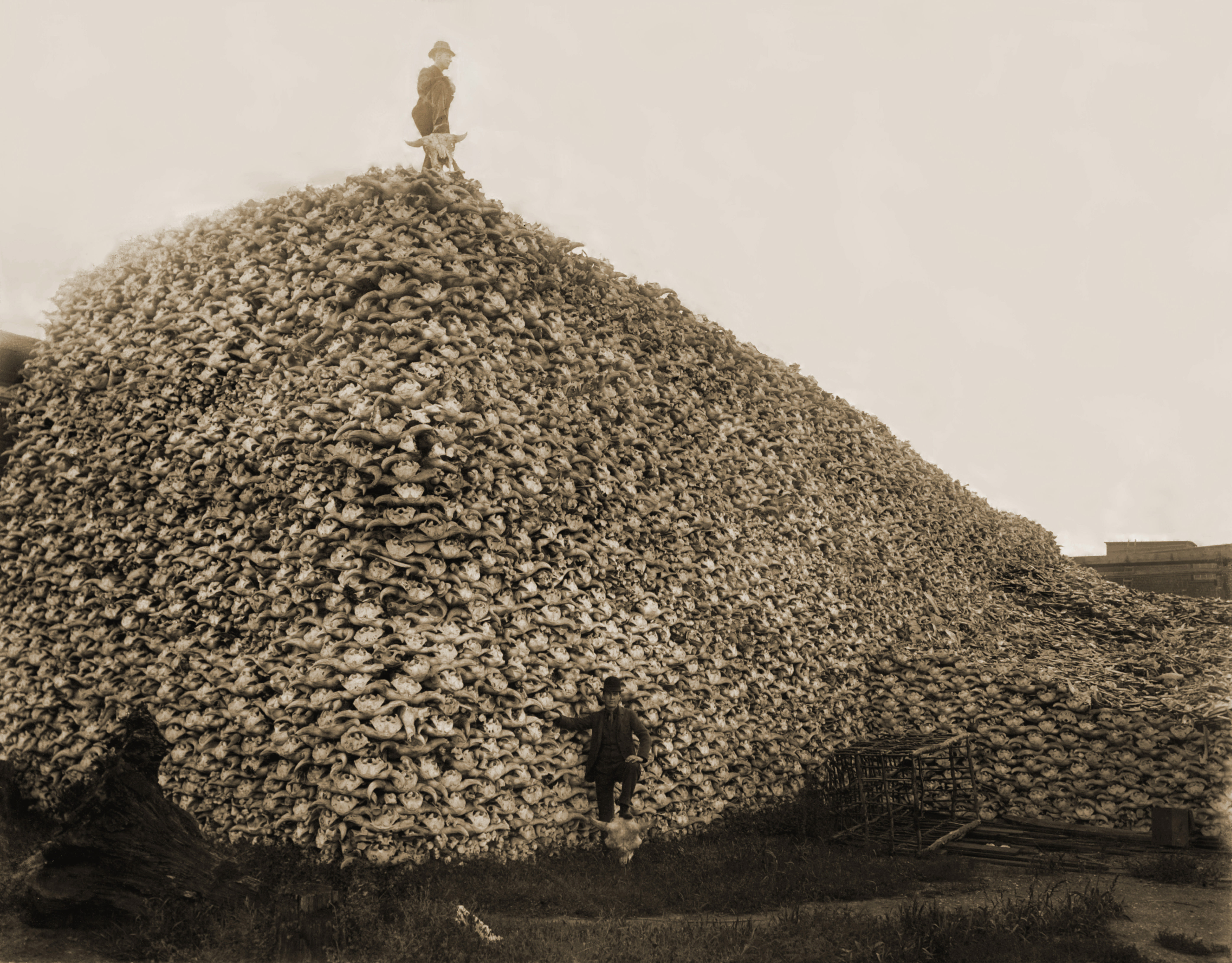
Photograph:
circa1892 of a pile of American bison skulls waiting to be ground for
fertilizer. Source: Burton Historical Collection, Detroit Public Library,
Author: Unknown author

Detailed view: Slavery Narratives: The Atlantic slave trade & The Native Americans
Please also look at this picture:
Triptych: The GALLEYS of SOULS by OtGO 2013–2021 acryl on canvas 215 x 1000 cm

